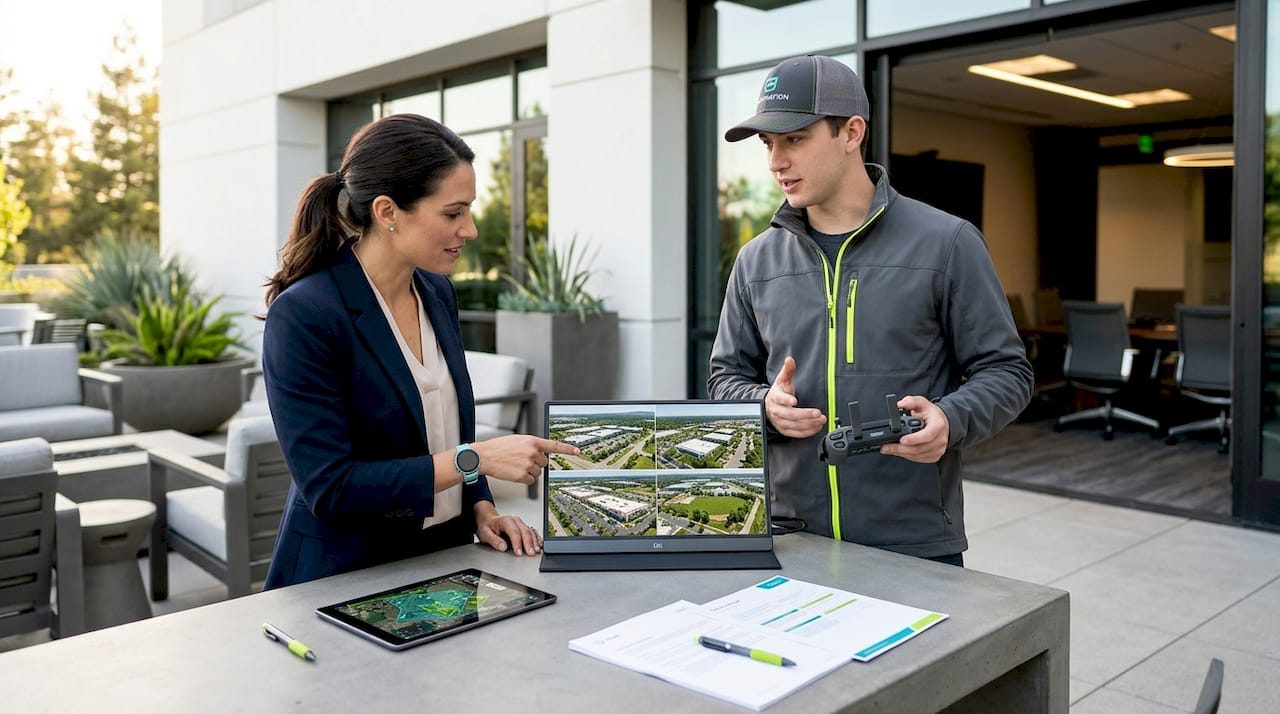
Aerial videography for business is not a luxury add-on. It’s a specific production discipline that uses drone-mounted cameras to capture footage from elevated vantage points, giving your audience a perspective that no ground-level camera can replicate. The industry term is drone videography or unmanned aerial vehicle (UAV) video production, and it has matured significantly over the past decade. What started as a novelty in high-budget film sets is now a practical, accessible, and measurable marketing tool for businesses that need to show scale, context, or transformation in ways that standard video simply cannot deliver.
Key Takeaways
| Point | Details |
|---|---|
| Aerial video is strategic, not decorative | Drone footage earns its place when it serves a narrative purpose, not just visual spectacle. |
| Compliance is non-negotiable | Professional providers must carry FAA Part 107 certification to operate legally for commercial use. |
| Industry fit matters | Real estate, construction, events, and tourism get the most measurable return from aerial content. |
| Integrate with ground footage | Aerial shots work best when paired with close-up, ground-level footage to tell a complete story. |
| Measure meaningful outcomes | Track dwell time, conversion rate, and lead quality, not just views and shares. |
What aerial videography for business actually means
At its core, aerial videography for business means using drones equipped with professional cameras to capture footage that supports a company’s marketing, sales, or communications goals. The equipment involved has advanced considerably. Most professional providers now fly drones carrying 4K HDR cameras with three-axis gimbal stabilization, which eliminates the shaky, disorienting footage common to consumer-grade drones.
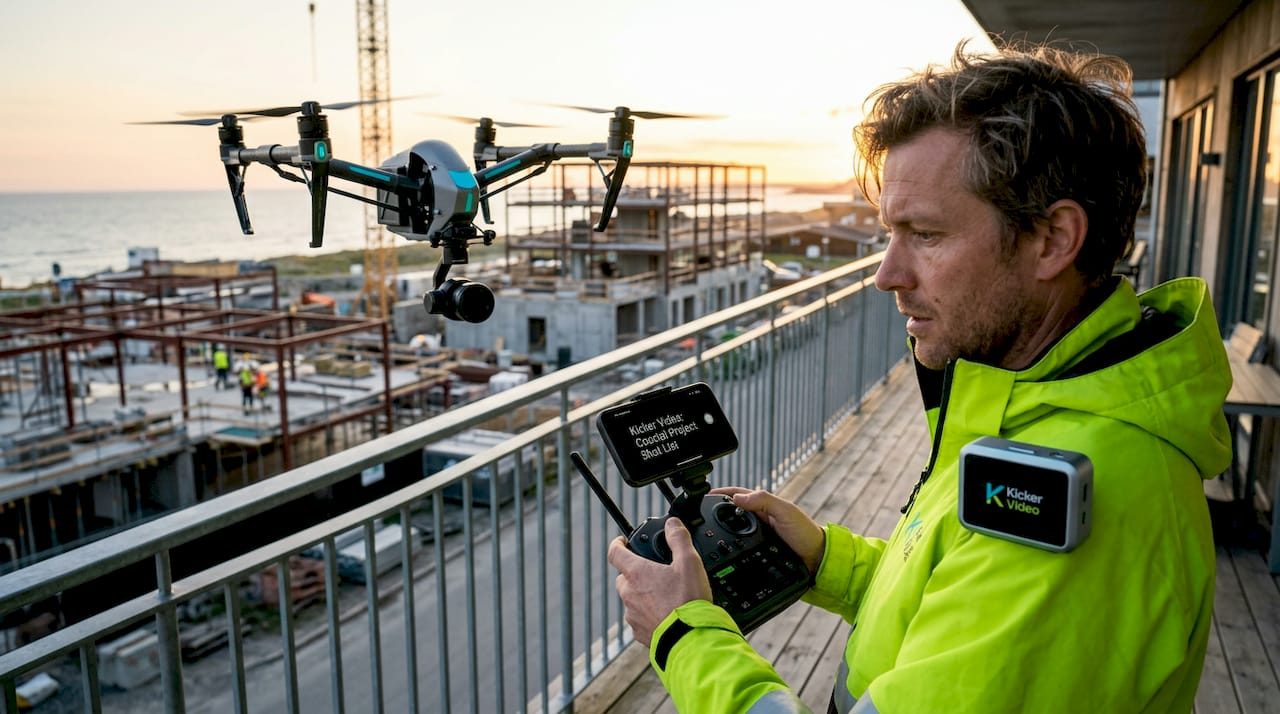
This matters for your brand. Unstable or low-resolution footage signals amateurism, and audiences notice it fast.
The distinction between aerial and standard video production goes beyond camera height. Ground-level shooting shows detail and emotion up close. Aerial shooting shows context, scale, and relationships between spaces that viewers simply cannot visualize from street level. A manufacturing facility looks like a building from the front door. From 200 feet up, you see its full footprint, its proximity to transportation routes, and the scope of operations. That context builds credibility without a single line of spoken copy.
Here is what professional aerial production typically includes:
- Pre-production flight planning and location scouting
- FAA Part 107 certified pilots and compliant airspace authorization
- 4K or higher resolution capture with color grading in post-production
- Gimbal-stabilized platforms for smooth, cinematic movement
- Deliverables in multiple formats for web, social, and broadcast use
Pro Tip: Ask your aerial provider for a sample reel shot specifically in conditions similar to your project, whether that’s urban, industrial, or open landscape. Generic demo reels often show the best-case scenario, not typical output.
Business uses and benefits across key industries
Aerial footage offers something no other format provides: accurate, compelling representations of scale, location context, and progress over time. That specific capability maps directly onto the marketing challenges of several industries.
| Industry | Primary use case | Business benefit |
|---|---|---|
| Real estate | Property and site overviews | Faster buyer decisions, higher perceived listing value |
| Construction | Progress documentation | Client confidence, investor reporting, safety records |
| Events and hospitality | Venue scale and crowd energy | Higher ticket interest, sponsorship appeal |
| Tourism and destination | Landscape and location showcase | Emotional pull, increased booking intent |
| Infrastructure and energy | Asset inspection and reporting | Reduced site visit costs, regulatory documentation |
Real estate, construction, events, tourism, and infrastructure consistently get the most return from drone video because their core product is tied to physical space. A hotel cannot explain its beachfront positioning with a lobby photo. A solar farm cannot demonstrate its scale with a close-up shot. These businesses need the wide view.
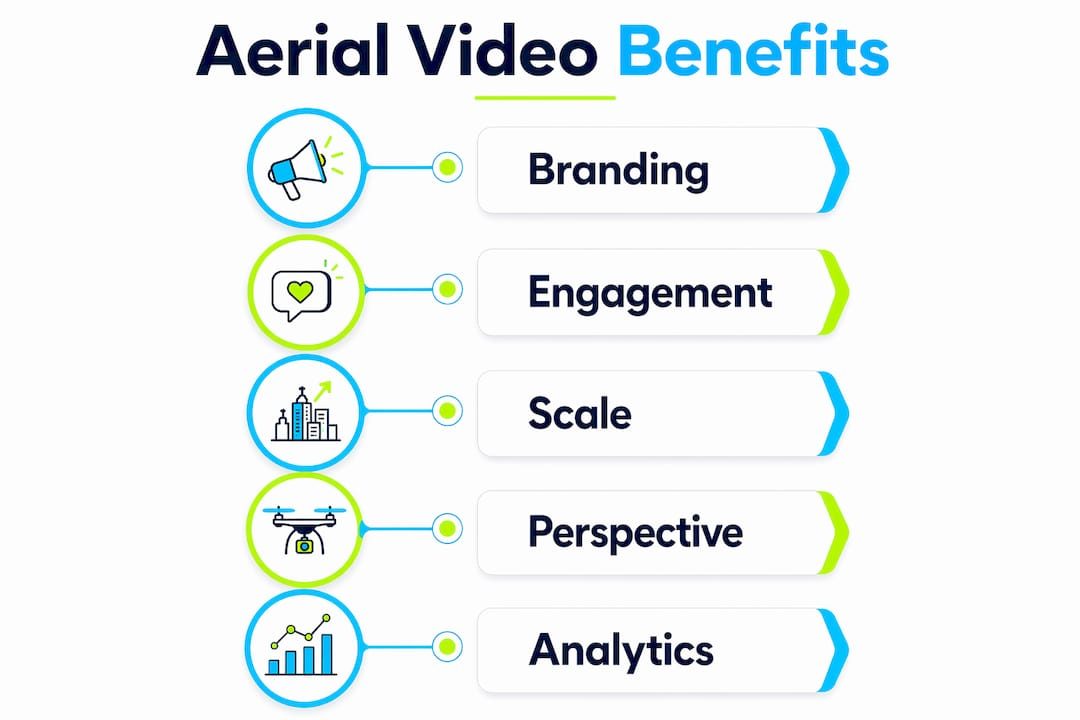
Beyond specific industries, there are three universal aerial videography benefits that apply across sectors. First, aerial footage triggers curiosity in digital feeds, where standard video has become wallpaper. Second, it builds transparency. When you show your facility, your event, or your site from every angle, you remove the doubt a buyer might have about what they are actually getting. Aerial footage’s ability to capture scale creates trust through transparency, reducing the hesitation that often stalls purchase decisions. Third, it signals production investment, which correlates in the viewer’s mind with business credibility.
Pro Tip: For construction and infrastructure clients, schedule drone flights at consistent project milestones. A before-and-after progression video from the same aerial angle is one of the most compelling pieces of content you can share with investors or end clients.
How aerial footage fits into your marketing strategy
Aerial video does not replace your content strategy. It amplifies it, but only when you place it in the right part of the funnel. Here is a practical framework for integration:
-
Awareness stage. Use wide, dramatic aerial establishing shots in brand films, social ads, and homepage hero videos. This is where 40% higher content shareability for aerial footage comes into play. The visual novelty stops the scroll and earns the first few seconds of attention.
-
Consideration stage. Pair aerial overviews with ground-level detail shots in case study videos or product walkthroughs. A real estate developer showing a site from the air and then walking viewers through a model unit creates a complete picture. Neither format alone tells the full story.
-
Conversion stage. Use aerial footage in proposals, pitch decks, and client-facing presentations. A 60-second aerial overview of a completed project speaks to a prospective buyer more powerfully than three pages of specification documents.
-
Retention and advocacy. Document milestones, completed projects, and events with aerial footage. Share these with existing clients as proof of progress and quality. This builds the long-term relationship that keeps clients coming back.
The metrics you track should reflect these funnel stages. Video marketing success requires defining goals, audience, timeline, and specific KPIs before you produce anything. For aerial content at the awareness stage, dwell time and share rate are meaningful. At the conversion stage, track lead quality and proposal win rate. Vanity metrics like raw view counts will not tell you whether your aerial investment is working. For a deeper look at what to measure, Kickervideo’s guide on measuring video ROI walks through the metrics that actually connect to business outcomes.
The pairing of aerial and ground footage is worth emphasizing because it is where many brands make a strategic mistake. They produce a beautiful aerial film and call it done. Narrative-driven integration of aerial shots as establishing shots, transitions, or reveals paired with close-up ground footage consistently increases audience engagement. The wide shot sets context. The close shot builds connection. You need both.
Choosing and working with aerial videography providers
Not all drone operators are equal, and the gap between professional and amateur output will directly affect your brand. Here is what to look for when evaluating providers:
- FAA Part 107 certification (in the US): Commercial drone operations require this certification. An uncertified operator puts your production and your company at legal risk.
- Liability insurance: Professional providers carry aviation-specific liability coverage. This protects you if anything goes wrong on location.
- Portfolio of commercial work: Look for examples in your industry or with similar production requirements, not just scenic flyover reels.
- Post-production capability: Raw drone footage needs color grading, stabilization review, and editing. Confirm your provider handles this or coordinates with a production team that does.
- Communication and pre-production process: A professional drone operator will conduct a location survey, file airspace authorization, and brief you on weather and safety contingencies before the shoot day.
The risk with amateur or hobbyist operators goes beyond legal compliance. Professional teams manage logistics, safety, and deliver advanced imaging products that amateurs simply cannot provide. Orthomosaics, GIS data, and color-accurate 4K footage require specific equipment and post-production workflows. You get what you pay for, and in video production, poor quality footage often costs more to fix than it would have cost to produce correctly.
Pro Tip: Request a pre-production call where your aerial provider walks you through their shot list. If they cannot describe how each shot serves your marketing message, that is a sign they are thinking like a pilot rather than a storyteller.
The role of video in branding is significant for businesses of all sizes, and aerial content raises the perceived value of your brand when it is produced and deployed thoughtfully.
Emerging trends shaping aerial video production
Drone technology is advancing faster than most marketing teams realize. Camera sensors on professional platforms now capture footage in resolutions that rival high-end cinema cameras. AI-assisted flight paths allow operators to program precise, repeatable movements that would be impossible to execute manually, which is particularly valuable for time-lapse progress documentation on construction sites.
Remote video production workflows are also changing how aerial footage gets used. Footage captured on location can be transferred, graded, and edited by post-production teams in a different city within hours. This shortens the turnaround from shoot to deliverable, which matters when you are working to a campaign deadline.
Audience expectations are rising in parallel with technology. Three years ago, a basic flyover of a commercial property felt impressive. Today, clients expect smooth cinematic moves, accurate color, and intentional composition. Businesses that invest in quality aerial production now build a content library that positions them well above competitors still relying on static photography. The strategic importance of B2B video will only grow as video becomes the default format across platforms where buyers research and evaluate vendors.
My perspective on aerial videography and brand storytelling
I have worked with businesses on video production for 18 years, and the pattern I see most often is this: companies invest in aerial footage for the spectacle and then wonder why it does not convert. The footage looks amazing. The comments are positive. But the business result is absent.
The problem is almost always that the aerial shoot was planned in isolation from the brand story. Someone saw a competitor’s drone video and wanted one. The production team delivered technically excellent footage, but nobody asked what business problem it was solving.
What actually works is treating aerial footage as one chapter in a larger narrative. I’ve seen a mid-size construction firm generate significant new client inquiries from a six-minute project story that used aerial footage for exactly 90 seconds. Those 90 seconds showed the full site before and after completion. The rest of the video covered the people, the process, and the outcome at ground level. The aerial footage earned its place because it answered a question the buyer had: “Can this firm actually handle a project of this scale?” One wide shot answered that definitively.
The businesses that get the most out of drone videography are the ones who plan it the same way they plan any other marketing asset, with a defined goal, a specific audience, and a clear place in the buyer journey.
— Kicker
Work with Kickervideo on your aerial video strategy
If you are ready to put aerial videography to work for your business, the production quality and strategic thinking behind your content will determine your return. Kickervideo has 18 years of experience producing B2B corporate video that connects with real buyers at every stage of the sales process. From planning your aerial shoot to integrating footage into a full content strategy, the team brings both technical expertise and marketing depth to every project. Explore what professional video production delivers in measurable B2B outcomes, and reach out to discuss how aerial content fits your brand goals.
FAQ
What is aerial videography for business?
Aerial videography for business uses drone-mounted cameras to capture footage that serves a company’s marketing, sales, or communications goals. It is also called drone videography or UAV video production and is distinct from hobbyist flying by its professional equipment, certified operators, and strategic intent.
Which industries benefit most from aerial video?
Real estate, construction, events, tourism, and infrastructure see the strongest results because their core offer involves physical scale, location context, or transformation over time, all of which are best shown from an elevated perspective.
Do drone operators need special certification?
Yes. In the US, commercial drone operations legally require FAA Part 107 certification. Hiring an uncertified operator exposes your business to legal liability and risks the entire production.
How do you measure whether aerial footage is working?
Focus on metrics tied to your funnel stage. Video marketing success depends on defining specific KPIs before production. At the awareness stage, track dwell time and share rate. At the conversion stage, measure lead quality and proposal win rate rather than raw view counts.
Should aerial footage stand alone or be paired with other video?
Aerial shots perform better when paired with ground-level footage. Using drone footage as establishing shots, transitions, or reveals within a larger video narrative produces stronger engagement than standalone flyover content.